Project
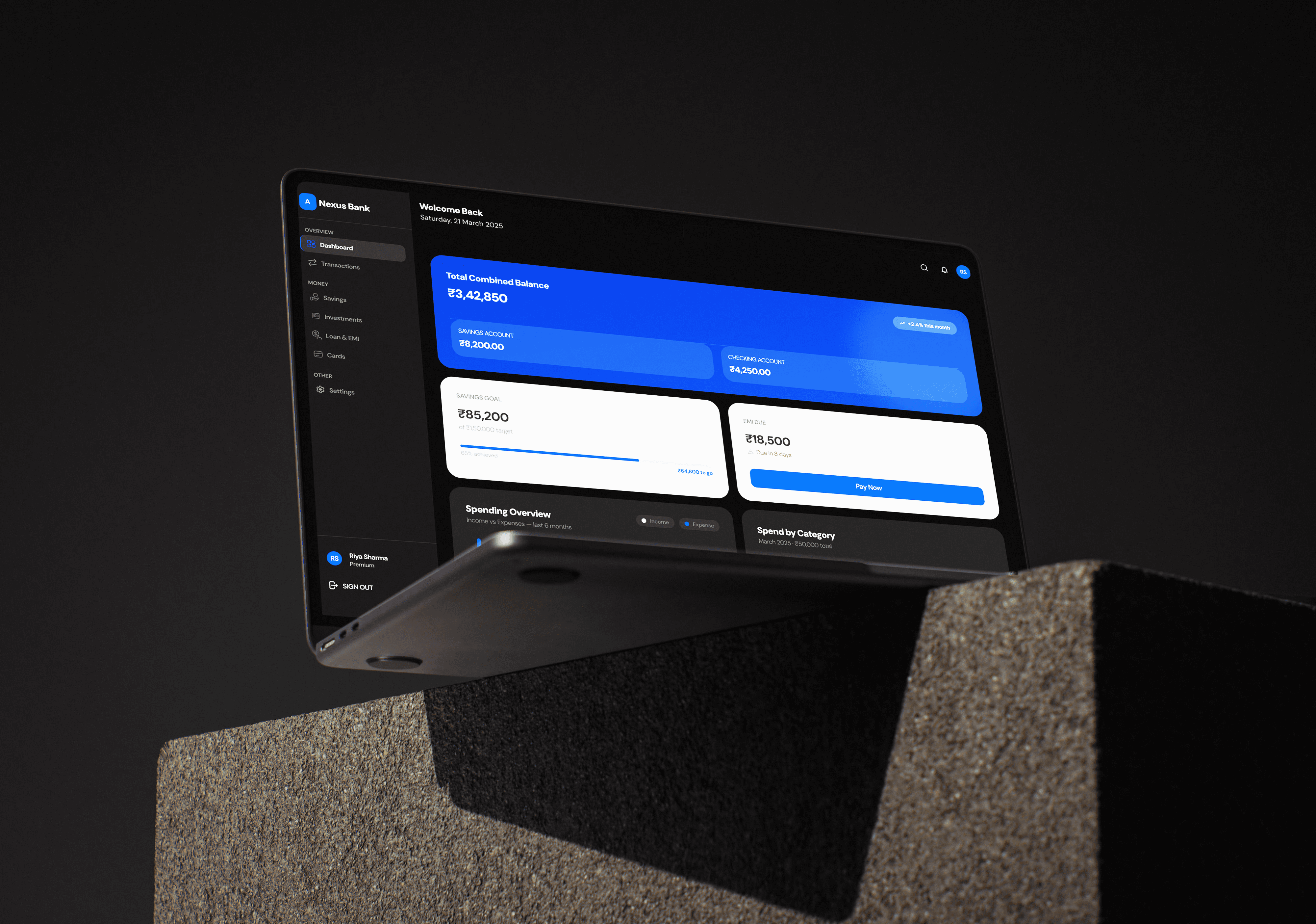
Nexus Bank — Fintech Experience Design
Role
UI/UX Design · Interaction Design · Design System
Approach
User-centered design · Component-driven system · Information hierarchy · Data visualization focused
Tools


Workflow
Research → Wireframing → Design System→ UI Design → Component System → Prototyping → Iteration
Project Overview & Objective
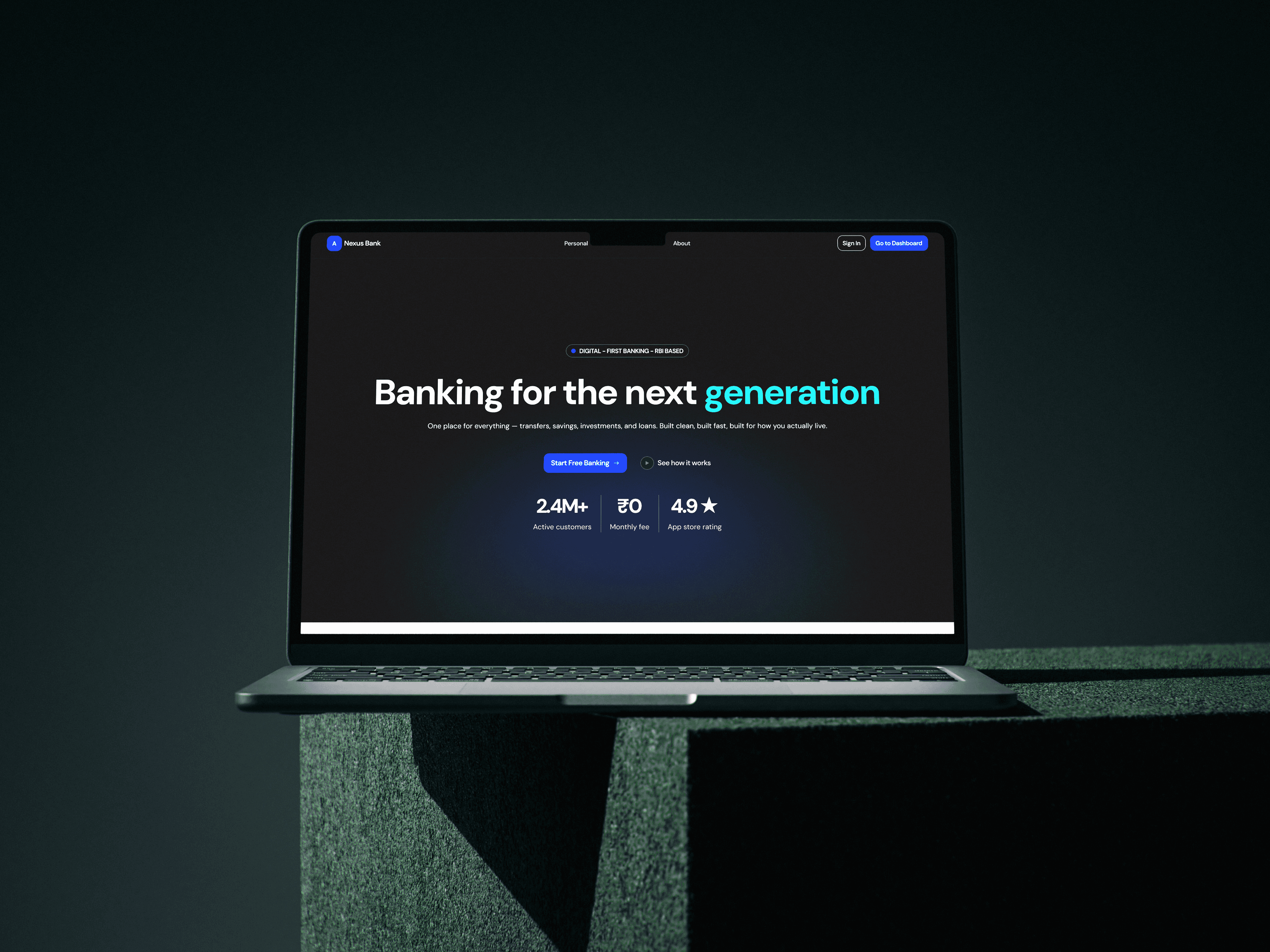
This project was designed as part of a 3-day assignment challenge to create a modern fintech experience covering landing, authentication, and core financial flows. The objective was to design a scalable and intuitive interface that simplifies complex financial interactions while maintaining strong visual hierarchy and usability. The focus was on building a system-driven solution rather than isolated screens.
Research & Approach
I followed a lean research approach by analyzing existing fintech products to identify common UX patterns, pain points, and user expectations. Key insights highlighted issues like cognitive overload and unclear navigation. Based on this, I structured a clear information architecture and user flow, prioritizing accessibility, quick actions, and seamless navigation across modules like dashboard, transactions, savings, and investments.
Design Thinking (UX & UI)
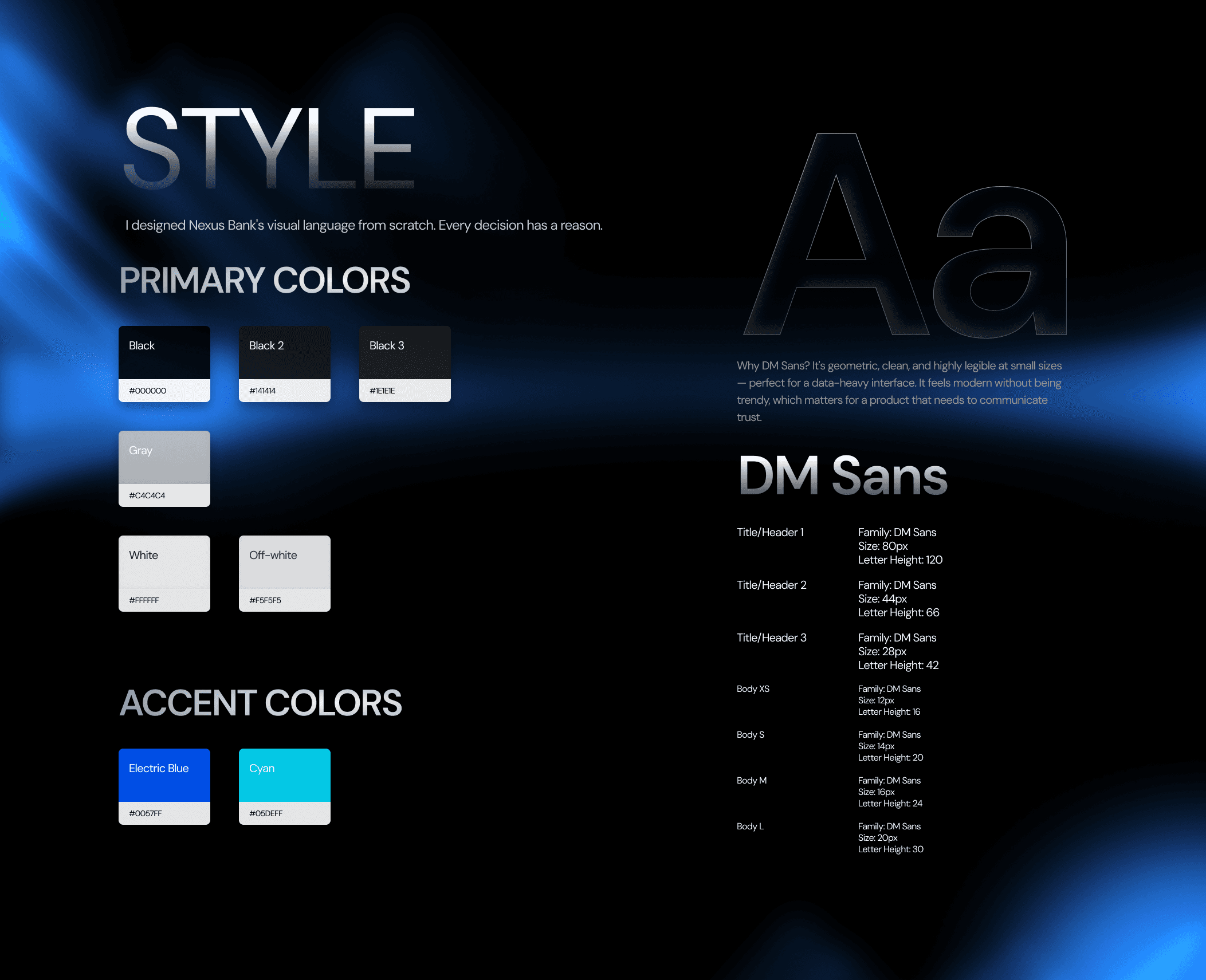
The design was driven by principles of information hierarchy, progressive disclosure, and visual grouping to reduce cognitive load. Emphasis was placed on data scannability, consistency, and interaction feedback. A component-driven approach ensured reusability and scalability, while a structured design system (typography, color tokens, spacing, and grid system) maintained consistency across the interface.
Execution & Outcome
The project was executed in Figma using auto layout, components, variants, and styles, enabling efficient iteration within the time constraint. The final outcome is a cohesive fintech interface that balances usability, clarity, and scalability, reflecting a practical, product-oriented design approach under real-world constraints.